
Menu
Ways to Reduce Branch Weight Before Bothell’s Windy Season
Tree Pruning Bothell
Fall gusts in Bothell signal a treacherous time of year for large, old trees near the Sammamish River; wind can cause limbs to break, and homeowners will likely seek out tree pruning to protect their branches from snapping. Pruning ahead of the storm helps to minimize potential harm to both people and property. By using certified tree pruning methods that allow trees to retain structural integrity, early pruning also supports compliance with the 2025 urban forest standards set by Snohomish County.
Identifying Bothell’s Wind Patterns and Tree Vulnerabilities
According to recent NOAA reports, Bothell is susceptible to late fall and winter gusts as high as 40 miles per hour. The dense canopies created by these winds can create excessive limb strain for all limbs greater than 20 feet above grade level. Additionally, evergreen tree species such as Douglas fir will accumulate significant amounts of snow load, while deciduous maple tree species may shed their leaves unevenly, creating an imbalance. Arborists emphasize conducting pre-season evaluations of your trees to determine where potential weakness may exist prior to the onset of the storm season.
Additionally, clay soils located throughout the Puget Sound Region have a tendency to compact the root systems of trees, thus reducing the anchorability of trees and exposing them to increased swaying forces from Pacific storms. Records indicate that there are approximately 15 percent more branch failures within the Bothell area than occur inland. Proactive pruning techniques can be used to counteract these forces. In addition to those residents living near Heritage Park, who experience increased exposure to open fields.
Optimizing Your Pruning Schedule for Wind Resistance
The optimal time frame for pruning in Bothell to optimize your trees’ resistance to wind forces begins in late summer and continues until early fall. Dormant pruning in the winter months provides an additional opportunity to make minor adjustments to your trees’ structure. Prune your trees during the spring when new growth begins, as this stimulates the production of “tender” growth that is more likely to be damaged during periods of high wind. Snohomish County guidelines provide recommendations that you should conduct a visual inspection of your trees no later than September. Following this recommended schedule allows for sufficient time for the formation of calluses (the protective layer of tissue) to develop before the onset of the storm season.
Review local weather forecasts for early indications of approaching storms. Coordination with certified arborists will enable precise scheduling of pruning activities. It is essential to plan ahead to allow for adequate time to complete pruning activities before the onset of inclement weather, as delayed pruning activities often result in hasty pruning practices that are typically performed under poor weather conditions. Studies conducted in the region indicate that proactive pruning activities may decrease branch failure rates by as much as 30 percent. This repeated practice will help build your trees’ resilience over time.
Techniques for Reducing Branch Weights
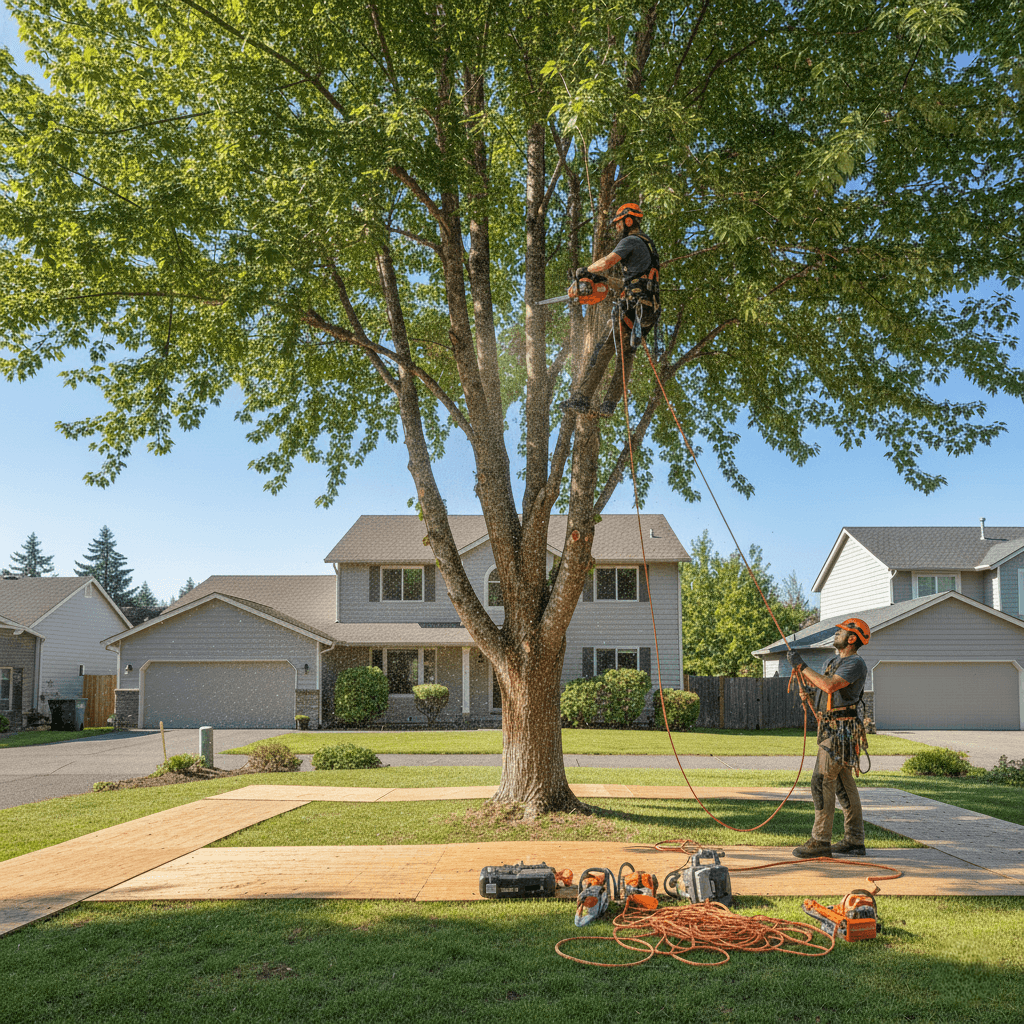
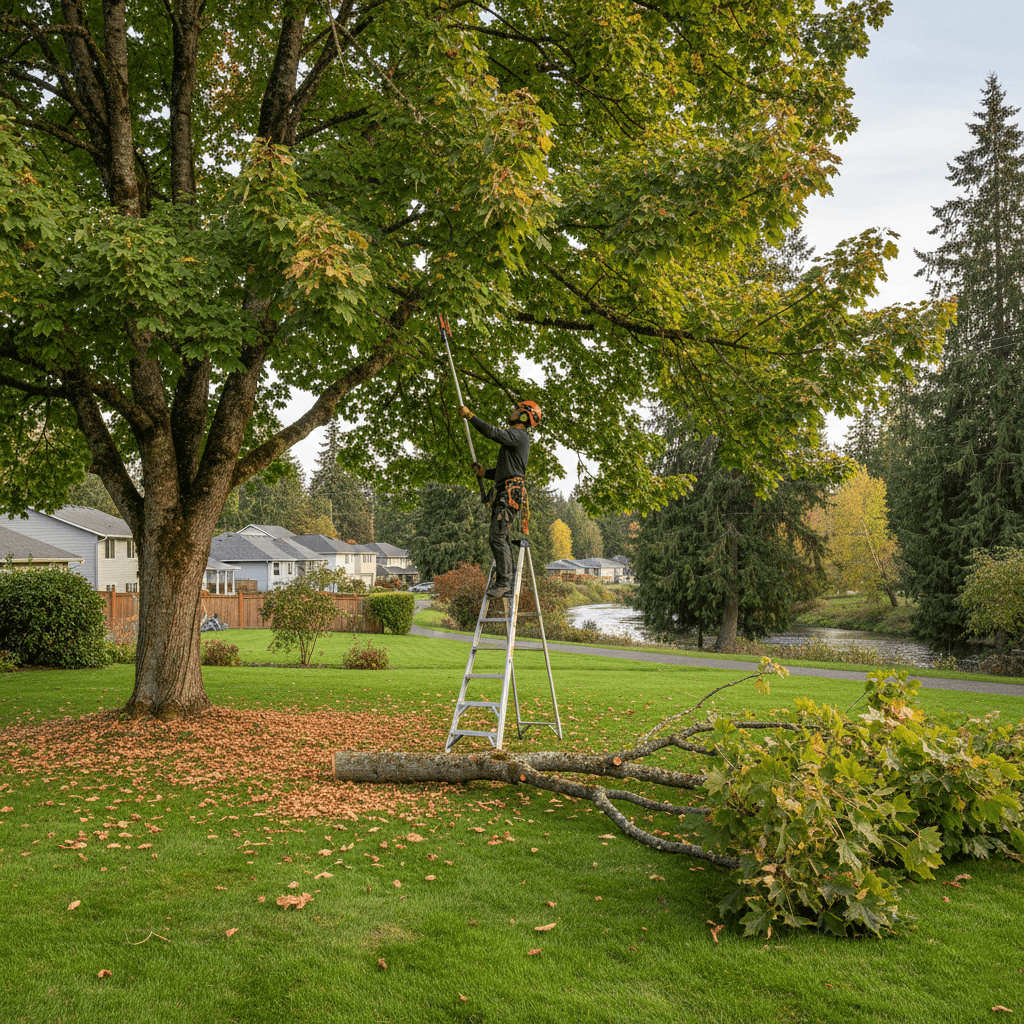
Dead or dying branches represent a significant source of dead weight that contributes to tree instability. Removing dead or dying branches reduces dead weight and increases the overall structural integrity of your trees. The three-cut method for removing branches greater than two inches in diameter involves making the initial cut at an angle slightly below the point of attachment to minimize damage to the surrounding bark, followed by a second cut (top cut) to remove the weight of the branch from the parent stem, and finally a third cut is made at the point of attachment to the parent stem (branch collar). This approach minimizes the potential for splitting the trunk of your trees. Reducing the length of the tips of long, overgrown branches by one-third using reduction pruning will maintain the natural shape of your trees. Thinning out the crowns of your trees will improve airflow and minimize the wind sail effect. Removing codominant stems to promote a central leader will also contribute to improved structural integrity. Pole pruners are useful for reaching branches as high as 15 feet without having to climb your trees. When cutting branches, always make angled cuts 45 degrees away from the location of the bud. These pruning strategies will enhance the stability of your trees without excessively thinning their crowns.
Tree Species Specific Pruning Strategies in Bothell
Selectively removing dead branches from the lower portion of the canopy of Douglas fir trees will help to elevate the canopy and increase the light penetration into the lower portions of the trees. Reducing the tips of Bigleaf Maple trees will help to reduce the amount of leverage exerted on the tree by strong gusts of wind. Crossing limbs on Red Alder trees that grow along river banks should be removed to prevent rubbing wounds. Coniferous trees tend to have fewer pruning limitations than deciduous trees; therefore, pruning coniferous trees should be limited to a maximum of 25 percent of the live crown.
Removing invasive plant species such as Laurel requires aggressive thinning to prevent the development of a dense canopy that traps wind. Madrone trees, native to the region, are slow to he;l, therefore, prune them with a minimum of intervention. Local extension service advisors will provide customized recommendations based on soil type. Pruning strategies that take into account the specific needs of each tree species will minimize the number of common mistakes that are made during pruning operations. Trees that have been properly maintained will be able to withstand variable front conditions more effectively.
Safe Work Practices During Pruning Activities
Always wear personal protective equipment (PPE), including helmets, gloves, and eye protection, during pruning operations. Secure ladders on a solid footing and use ladder safety harnesses to secure yourself to the ladder when working at elevations above 10 feet. Riggers can be installed on larger limbs to control the descent of the limb and prevent it from swinging wildly. Keep work areas clear of pedestrians, children, and pets. Snohomish County OSHA regulations require compliance with the above-mentioned practices.
Inspect the area for power lines before commencing pruning activities. If branches are within six feet of overhead wires, contact the utility company to arrange for trimming or removal. Use clean, sanitized tools to minimize the introduction of disease organisms into your trees. Monitor your trees for signs of stress, such as wilting, after pruning has taken place. Have an emergency kit available to treat minor injuries on-site. By being vigilant, you can eliminate the possibility of accidents occurring annually.
Tools and Equipment for Successful Pruning Operations
Shears are the most effective way to prune small-diameter branches (<1/2 inch). Loppers are best suited for branches up to 2 inches in diameter. Saws can be used for larger branches to ensure that the cut is made straight. Pole tools can be used to reach branches without having to climb your trees. Consider purchasing battery-powered pole saws to minimize user fatigue when completing lengthy pruning sessions.
Disinfect your pruning blades regularly to prevent the spread of pathogens. Store your pruning tools in cases designed specifically for storing pruning equipment to maintain the edge retention of your tools. Local nurseries and landscapers will carry pruning equipment suitable for pruning trees in the Pacific Northwest. Proper maintenance of your pruning equipment will extend the lifespan of your tools.
Post-Pruning Care to Enhance Tree Health
Mulching around the base of your trees to retain moisture will help your trees recover from pruning activities. Deep watering of your trees during dry spells will assist in the healing process. Slow-release fertilizers applied in the spring will promote healthy growth. Inspect your trees for insects that are attracted to the newly opened wound sites. Utilize integrated pest management (IPM) strategies that meet the environmental objectives of Snohomish County.
Conduct annual inspections to evaluate the effectiveness of your pruning strategy. Plant understory native plants as windbreaks. Native plants will stimulate quicker healing of wounds and produce denser wood. Maintaining a healthy and well-maintained yard will yield healthier and more resilient trees.
Avoid Common Mistakes in Wind-Prep Pruning
Remove dead, diseased, or hazardous branches to minimize the potential for branch failure. Topping or de-liming trees can lead to the development of decay and weak regrowth, and ultimately, increase the likelihood of future branch failures. Excessive pruning can shock your trees and potentially stunt their growth. Flush cuts cause injury to the cambium layer and slow down the sealing of wounds. Failure to consider the needs of the specific tree species can lead to premature branch failure. Pruning large branches without proper training and equipment can result in serious injury or property damage.
When Bothell is preparing for the area’s infamous windstorms that will be blowing through Heritage Park to the Sammamish River, strategic tree trimming provides a defensive barrier for your landscape from the tempests. Bothell Tree Experts is prepared with effective techniques to reduce weight & enhance the structural integrity of trees. We provide our clients with an expert method to protect their investments, based on Snohomish’s 2025 standards.
LATEST POSTS