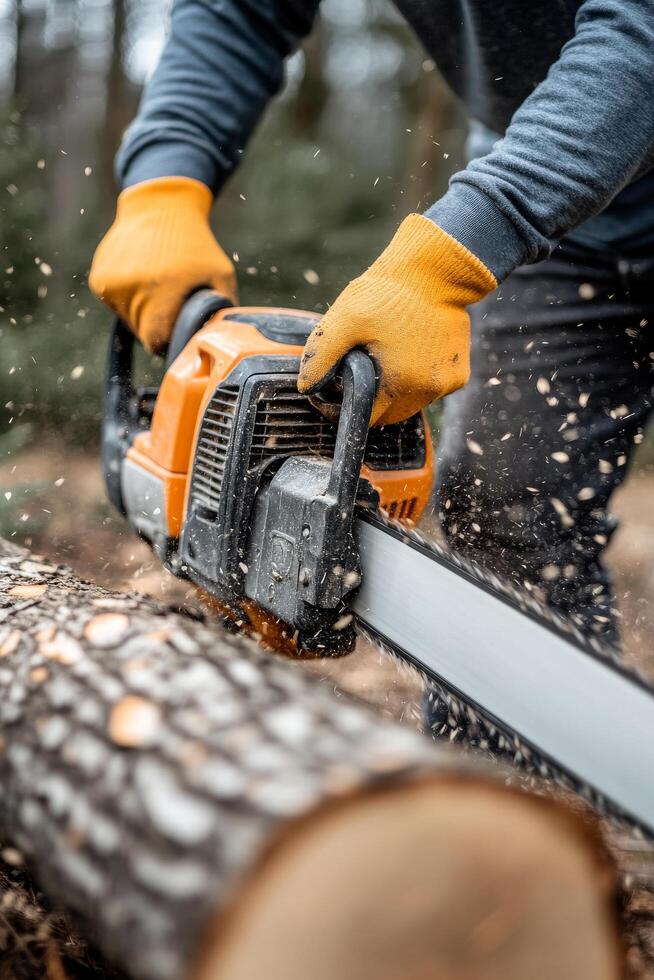
Professional Tree Removal Services in Bothell, WA
Experience in Removing Trees With Expertise and Care
When precision and safety are paramount for a tree removal, it is among the most hazardous and difficult tasks in arboriculture. To perform a tree removal that meets these standards, there needs to be considerable experience in this field (knowledge), as well as extensive use of professional equipment and techniques, as well as an unrelenting commitment to safety. For over two decades, Bothell Tree Experts has completed thousands of successful tree removal projects in Bothell, WA, and its surrounding communities, and thus has earned the reputation of being the most experienced and reliable tree removal company in the Bothell area.
Regardless of whether you have a hazardously leaning tree that could pose a threat to your home, or if you need to clear land for new development, or if you need to remove trees damaged by storms, or if you just want to create open space for landscaping improvements, our Certified Team can safely and efficiently handle your tree removal project. Our certified team handles each tree removal project, from the smallest ornamental tree to the tallest evergreen, with the same detailed care and attention to safety as they do with all other aspects of the tree removal process.
Bothell Tree Experts’ method involves using technical skill to perform the tree removal project, as well as careful planning. Before beginning the tree removal process, our Certified Team will completely assess the tree, assess the site conditions, identify all potential hazards, and devise a strategic tree removal plan. By doing so, we are able to safely remove trees even when access to the tree is restricted due to nearby structures or complex branch patterns.
Is It Time to Remove Your Trees?
Assessing Whether Your Trees Need To Go
Removing a tree is an emotional experience for many people. Many people consider their trees to be long-standing members of their family and do not want to lose them. There are times, however, when removing a tree will be the best option as well as the safest. Our certified arborists will assess your trees, provide you with recommendations, and help you decide whether your trees should be removed due to one of the following reasons:
Safety Risks
Trees That Are Dead or Dying: The risk of dead or dying trees failing unexpectedly is high because they are no longer flexible. A dead tree cannot absorb impact; therefore, even the smallest branch could fall off at any time.
Trees With Sudden or Severe Leans: Some trees lean slightly, but when a tree leans severely, it is usually indicative of root failure and/or structural instability. If a tree is leaning towards a home, driveway, power line, or public area, this represents a serious safety concern and requires professional evaluation.
Trees Damaged by Storms: Strong winds and storms can cause a variety of issues with trees, such as splitting the trunk, breaking large branches, or uprooting the tree partially. Although a tree may still be standing after a storm, the structural integrity of the tree may have been compromised beyond repair, and removal would be safer than attempting to save it.
Property and Infrastructure Problems
Trees Damaging Foundations: Tree roots seek water and can enter cracks in foundations and pipes, including sewers and septic systems, creating costly problems. A large tree located too close to a structure may require removal to protect your investment.
Trees Overhanging Homes: Trees that overhang homes present a danger of falling branches and make roof maintenance impossible. Trees that overhang homes also support the growth of moss, trap debris in gutters, and can damage roofing materials constantly.
Trees Growing Into or Near Power Lines: Trees that grow into or near power lines create a number of safety concerns and service disruptions. Removing the tree is often safer and less expensive than repeatedly trimming the branches.
Get A Free Quote
Tree Removal Safety Considerations
Identifying the Potential Hazards of Removing a Tree and the Safety Precautions We Take
Removing a tree is a hazardous process that makes professional services absolutely critical. When you understand what dangers exist, it is easier to comprehend how important it is to have employees who have received proper training, have the right equipment, and follow the proper safety protocols.
Some Common Dangers Associated with Removing a Tree
Objects Falling From Above: One of the most apparent dangers is falling objects such as trees, branches, and equipment, which can result in severe injuries or even fatalities when striking someone. We enforce a very specific and defined area of exclusion for all personnel on the premises, utilizing spotters to prevent anyone from being struck by falling debris.
Contact with Power Lines: If contact is made with an electrical power line, electrocution will occur. Before each job, we inspect the location of all overhead power lines and, if necessary, coordinate with local utility companies.
Unpredictable Trees: Trees that have been damaged by disease, have split trunks, or have unstable roots can be unpredictable. Before beginning each job, we conduct an assessment of the condition of the tree to determine whether it has any potential instability issues, and if so, implement the necessary safety precautions.
Hazards Associated With Equipment: While chainsaws, chippers, and other types of equipment are designed to do a particular task efficiently and safely, there is always some degree of potential for injury when using them properly. Our employees receive extensive training on the safe operation and maintenance of our equipment, as well as the necessary safety procedures.
Our Safety Procedures
Hazard Identification/Risk Assessment: Before beginning any job, we conduct a thorough hazard identification/risk assessment to ensure we have identified all potential hazards associated with the job.
Site-Specific Safety Plan: After conducting our hazard identification/risk assessment, we develop a site-specific safety plan identifying the specific hazards at that location and implementing controls and/or countermeasures to mitigate those hazards.
Clear Communication: To maintain a safe working environment, we utilize hand signals, radios, and verbal communication among all personnel involved in the work process to keep everyone informed and coordinated.
Clearly Defined Exclusion Zones: We establish a clearly designated area (exclusion zone) where only authorized personnel are allowed to enter; this ensures no unauthorized person enters the area while we are removing the tree.
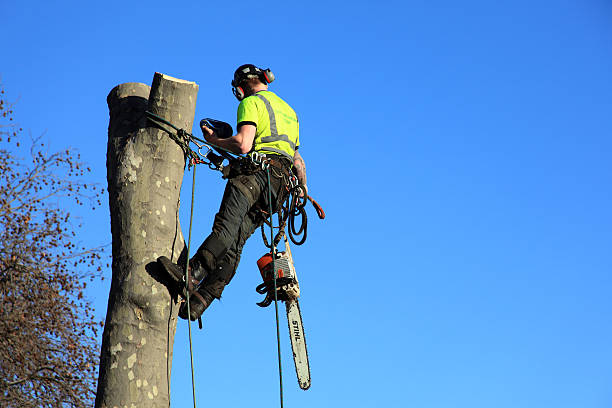
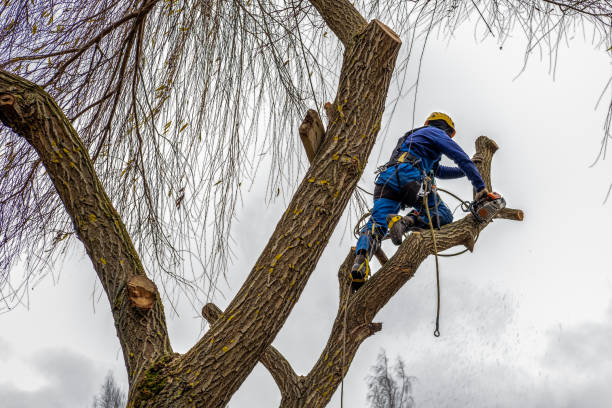
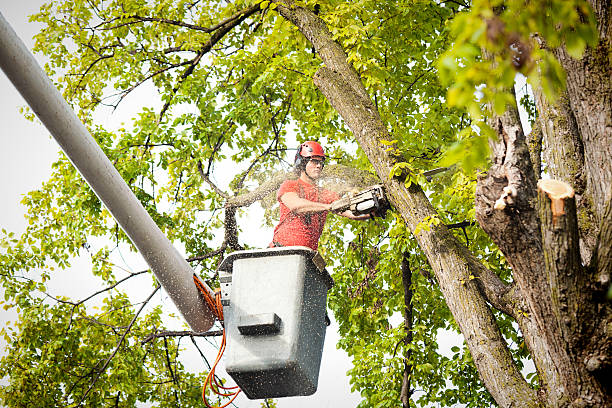
Our Tree Removal Process
Step-by-Step Safe Method of Removing Trees
Bothell Tree Experts’ every tree removal job follows a systematic process to ensure the best possible safe environment, minimum disturbance to property and the quickest possible removal of trees. When you hire us to remove one or many of your trees, this is the process you can expect:
1. Consultation/Assessment of Your Property
Our certified arborist will come to your property and evaluate the tree you want to have removed. We will determine the tree’s size and health, the direction it leans, how close it is to buildings, etc. Any other factors that may affect our ability to remove your tree safely and effectively will also be considered.
2. Detailed Written Proposal
You will receive a detailed, written proposal that describes exactly what we will do, including the removal method, how we will handle your debris, and how we will clean up your property. You will see a list of all items we charge for, and there will be no additional costs added once we start work. You will know exactly what to expect before we begin.
3. Pre-Removal Permits
We can assist you in obtaining the necessary permits if your local government requires them for tree removal.
4. The Actual Removal of the Tree
Depending on the size of the tree, where it is located, and the overall site conditions, we will utilize one of several removal methods. The removal method we select is determined by the safest and most efficient way to remove your tree.
5. Debris Management & Removal
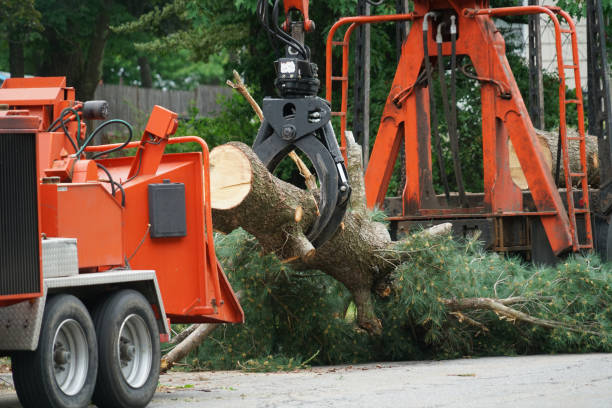
Any smaller branches and foliage will be fed into our commercial wood chipper and will become wood chips that will either be taken off-site or left for you to use as mulch.
6. Final Clean Up
Once we have removed your tree, we will thoroughly clean up your property. Every last piece of wood, branch, and leaf will be removed from your property. We will then rake and clean up any area of your lawn that was damaged by sawdust or small debris.
Stump Removal Options After Tree Removal
What To Do About The Remaining Stump
Once you remove trees from your property you are left with a stump on the ground. There are many ways to deal with this stump and each method has its own advantages and disadvantages.
Stump Grinding (Preferred Option)
Stump grinding using a grinder rented by professionals is the most common and the most successful option. A grinder with a special cutting wheel cuts the stump down to chips just beneath the surface of the soil.
Advantages:
- Eliminates all of the stump and above-ground roots.
- Permits lawn restoration or planting.
- Makes lawn mowing, raking, etc. easier.
- Eliminates pests and potential stump regrowth.
- Typically completes in less than one hour.
Process: Grinder grinds stump into chips typically 6-12 inches deep in the ground (also may be deeper). Chips from stump may be removed and disposed of as debris; they also can be used as mulch for other plants; or they can be used to backfill the hole.
Leave the Stump
If you do not want to remove the stump some people choose to keep them, especially if you have woodland areas or if removing the stump would be too expensive.
Drawbacks:
- Decomposition of stump is slow – usually 10 to 20 years before the stump is completely gone.
- Attract wood-boring insects and fungi.
- Obstacles to lawn maintenance.
- Not usable until the stump decays.
- Will grow new shoots every few months and require regular pruning.
Decorative Stump Features
Property owners who are creative have turned their stump into various decorative elements such as carved sculptures, planters and bird baths.
Disadvantages:
- Only works well for stumps in a prominent location where you want to showcase a piece of art.
- To create a sculpture or other decorative element you need either a lot of talent or you need to hire someone else to do the work.
- Even when treated the stump will eventually decompose.
- Only suitable for those who like a rustic look.
Recommendation
For most residential customers we prefer to perform stump grinding. Stump grinding is a permanent solution that will allow you to fully utilize your property and prevent any future problems. Stump grinding is an add-on service to our tree removals and can typically be completed within a short period of time following the completion of the tree removal or at a later time that is convenient for you.