
Menu
How Soil Compaction in Bothell Yards Affects Tree Longevity
Tree Care Bothell
The health of your soil is the key to healthy, long-lasting trees. For example, in Bothell, WA, with many mature maples, cedar, and fir trees on suburban lots, soil compaction can be an unseen threat to shortening the life of the trees themselves. Soils become compacted from vehicular traffic, foot traffic, or even lawn mowers, which will impede the ability for roots to grow, limit the soil’s water absorption, and reduce oxygen available to the microorganisms living within the soil. Understanding how this impacts the trees is an important part of being able to proactively address it, as taking care of your trees can help extend their life and help maintain the beauty of your property.
How Do I Stop My Trees From Dying Due To Poor Soil Quality?
Soil compaction occurs when soil particles become crushed and pressed tightly together, resulting in reduced pore space. This results in poor drainage and poor aeration of the root system. Heavy foot traffic, construction activities, and vehicle use can all cause soil compaction. Many of Bothell’s suburban homes have compacted soil due to the high use of the area near their driveways, walkways, and playgrounds. The restricted root growth caused by soil compaction will weaken trees over time.
How Does Compaction Affect Tree Longevity?
The most important factor affecting tree longevity is oxygen supply to the roots, which allows trees to respire. If there is inadequate oxygen flowing into the root system, the roots cannot function properly to support the tree. Also, decreased water infiltration leads to drought stress even in the wettest of Bothell weather. Additionally, compaction causes an increase in nutrient uptake inefficiency. Stunted growth and increased susceptibility to disease result from this lack of efficiency. These factors can significantly decrease tree longevity and make them less resilient to windstorms.
Common Signs of Compacted Soil in Your Lawn
Poor Drainage
Compacted soil is easy to detect because if you see puddles forming after it rains, the chances are that your soil is too compacted. Even though Bothell has frequent rainfalls, healthy soil absorbs water quickly.
Thin or Patchy Grass
Compacted soil not only harms trees, but it can also harm your lawn. Thin grass or patches of no grass at all can mean that there is a problem with the soil and its ability to support root growth.
Limited Tree Growth
Limited tree growth during the growing season can also be a sign of compacted soil.
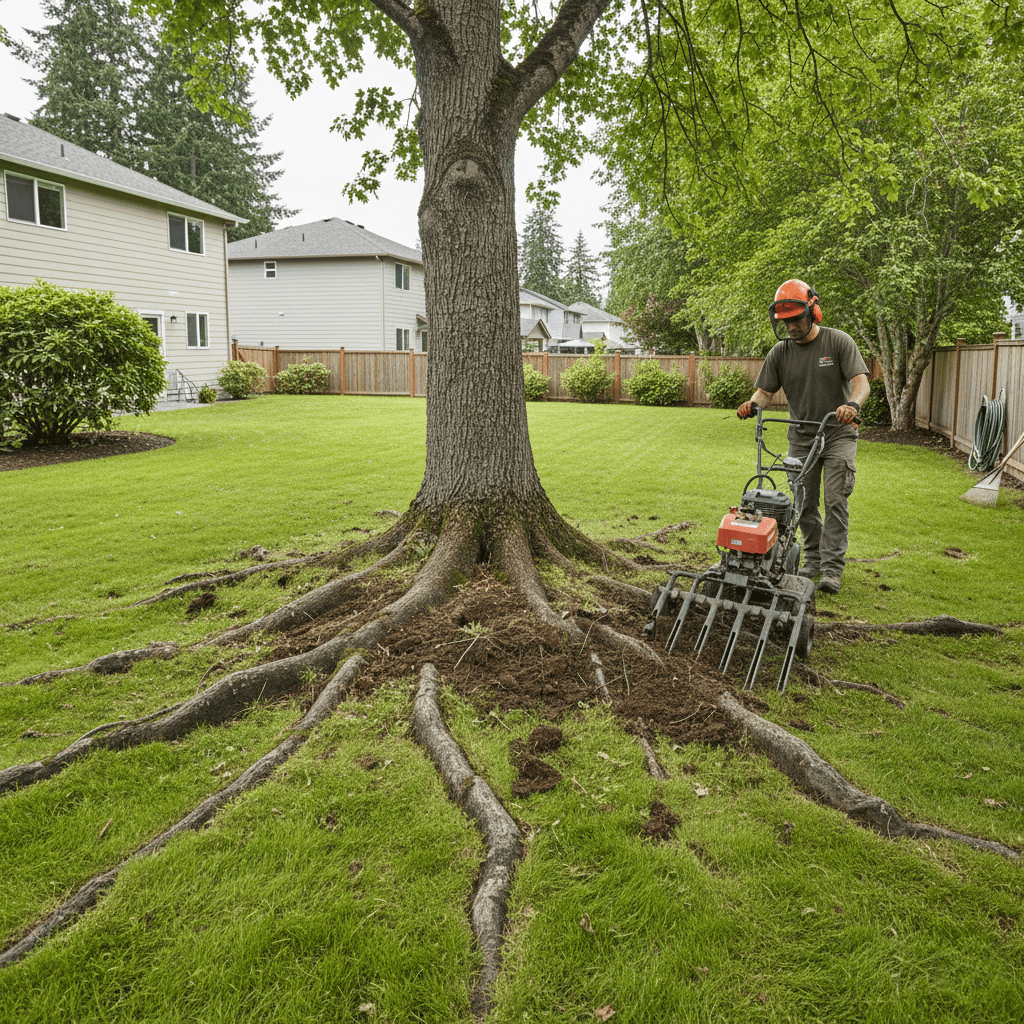
Surface Rooting
When roots begin to grow on the surface of the soil, it can mean that they could not penetrate the soil layers below, leaving the tree open to damage.
Professional Services to Help Solve Tree Problems Caused By Compacted Soil in Bothell
Many homeowners who live in Bothell seek tree service professionals who specialize in helping solve problems caused by compacted soils. Some of the most common solutions include aeration, which creates paths for air, water, and nutrients to enter the root zone; mulching, which maintains soil moisture levels and keeps foot traffic off of the lawn; avoiding using heavy machinery on lawns; and, in extreme cases, amending the soil to restore its structure and fertility.
Ways to Prevent Compacted Soils
Prevention is always the best solution. Vehicles should never drive on lawns; designated pathways should be made for people walking through the lawn, and children should be encouraged to move their toys to a different part of the lawn so that the same section of the lawn is not stressed continuously. Groundcover plants can also help prevent compacted soil from occurring. In addition, Bothell residents who take a proactive approach to maintaining the health of their soil will greatly increase the longevity of their trees.
Why Healthy Soils Matter
Maintaining healthy soils not only supports trees but also other aspects of local ecosystems as well. Compaction reduces the amount of diversity in beneficial organisms within the ecosystem. When residents of Bothell take action to correct and maintain the health of their soil, they are contributing to the overall sustainability goals of the city and preserving the natural beauty of Bothell. Using sustainable methods such as composting and mulching can improve the overall condition of the soil while reducing waste.
How Working with a Local Arborist Helps.
Arborists who work locally know what types of soils exist in Bothell and the types of tree species that exist in Bothell. Therefore, they can provide specific solutions to address compacted soil in yards and ensure long-term tree health. Professional tree service providers offer many benefits, including soil testing, aeration, and long-term maintenance to ensure that the homeowner’s landscaping remains lush and strong.
Tips For Homeowners to Improve Soil Health
Look for puddles of water after it rains, and if you find any, inspect the soil to determine how compacted it is. Never park vehicles on the lawn or near tree trunks. Mulch trees to help keep foot traffic from damaging the soil and to help retain moisture in the soil. Have your trees inspected regularly by an arborist to identify potential issues before they become major problems.
Frequently Asked Questions
How Does Soil Compaction Cause Shorter Life Spans In Trees?
By limiting oxygen, water, and nutrient availability to the roots, compaction weakens the roots, making the tree less capable of surviving harsh environmental conditions and providing long-term structural integrity to the tree.
Can Compacted Soil Be Fixed?
Yes, aeration, mulching, and amending the soil with organic matter can restore the soil’s structure and improve the health of the tree.
Is Soil Compaction Common In Bothell, WA?
Yes, the high volume of pedestrian and vehicular traffic in the suburbs of Bothell creates ideal conditions for soil compaction, especially in residential areas close to driveways and walkways.
How Often Should Soil Be Aerated?
Aeration frequency depends on the level of use and type of soil in your lawn. Most lawns require aeration once per year to three years.
Conclusion
Bothell Tree Experts provides comprehensive tree care services to help address soil compaction and help your trees reach their full potential. Our experienced staff utilizes tried-and-true methods to restore the health of your soil and to ensure that your trees remain healthy and thriving for generations to come.
LATEST POSTS